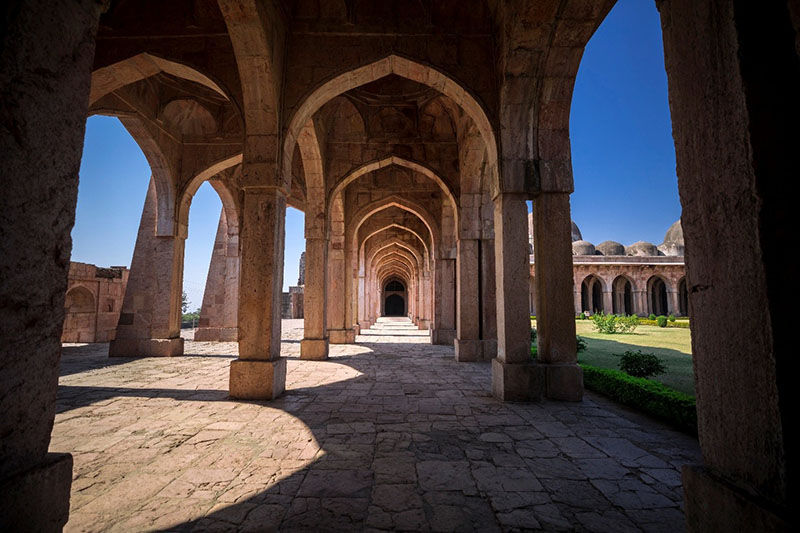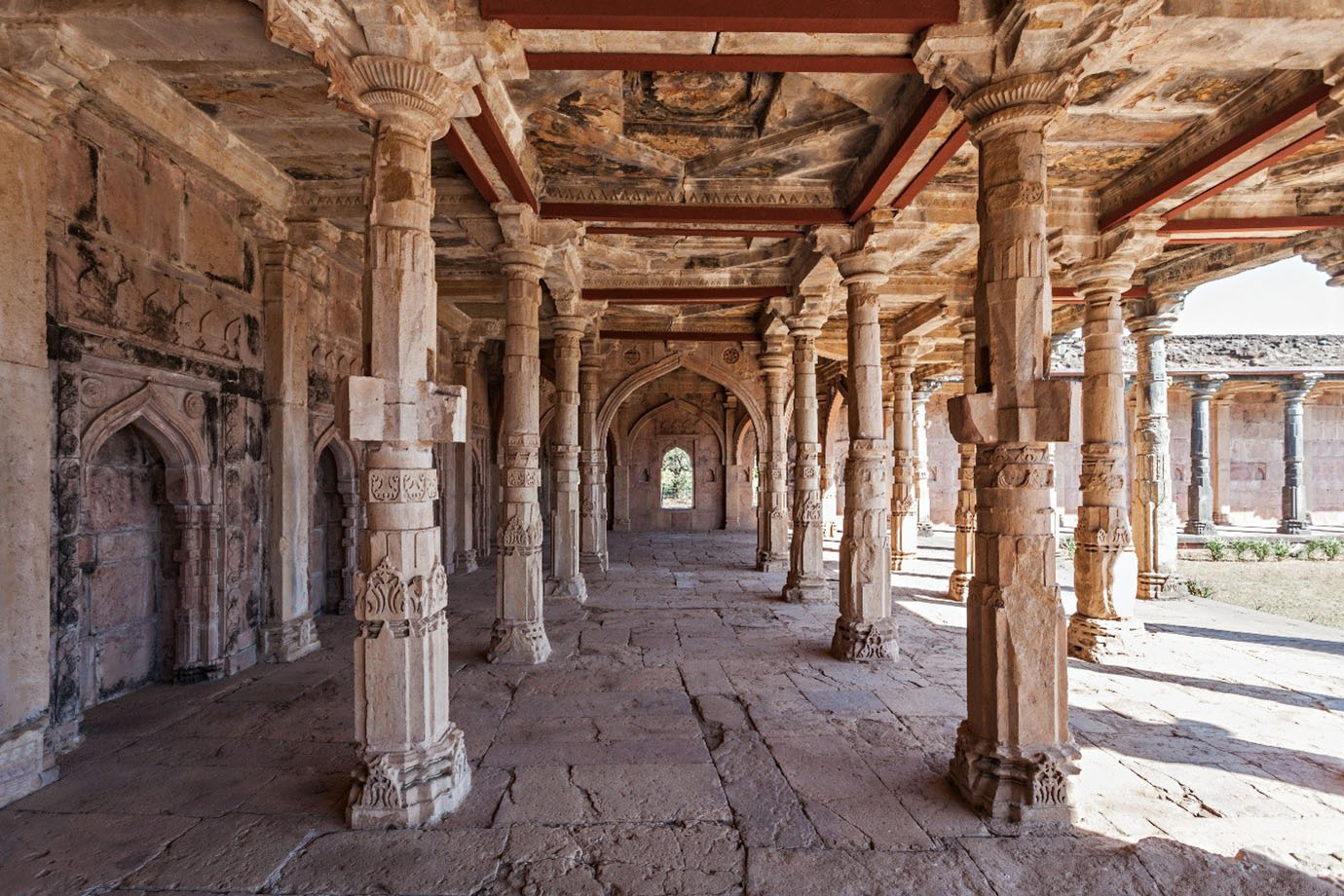
– Jami Masjid, Mandu, Madhya Pradesh
Echoes of Great Civilisations Hidden Among India’s Ancient Ruins
From ancient universities to imperial capitals, these remarkable ruins reveal extraordinary civilisations.
India’s historic ruins are more than architectural remnants — they are enduring reminders of cultures that once flourished across the subcontinent. Walking through these remarkable sites reveals the imagination, knowledge and power that defined some of history’s greatest civilisations.
1. Imperial capital: Hampi
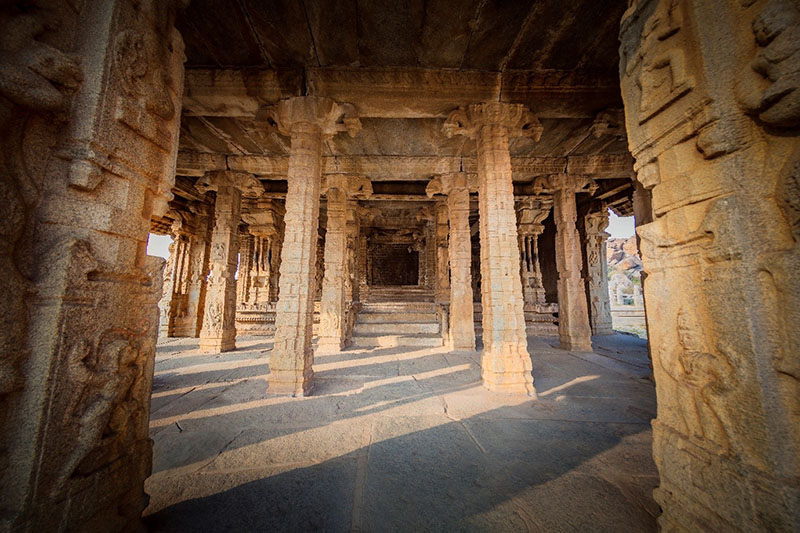
Once the dazzling capital of the Vijayanagara Empire, Hampi unfolds across a surreal landscape of granite boulders and temple complexes along the Tungabhadra River. The ruins of royal enclosures, grand bazaars, and intricately carved temples evoke the splendour of a city that once rivalled the greatest capitals of the medieval world. As the golden light of sunset settles over the stone chariot of the Vittala Temple and the vast courtyards of the royal centre, the scale and sophistication of this lost empire become truly unforgettable.
2. Romantic ruins: Mandu
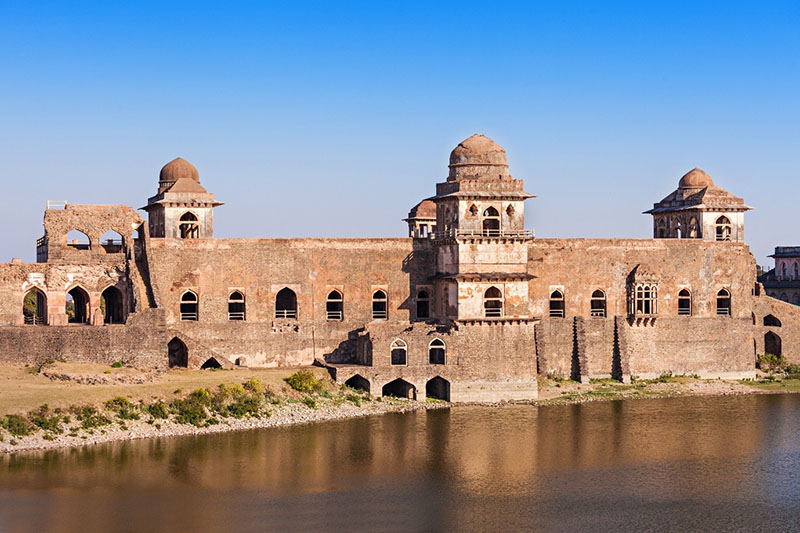
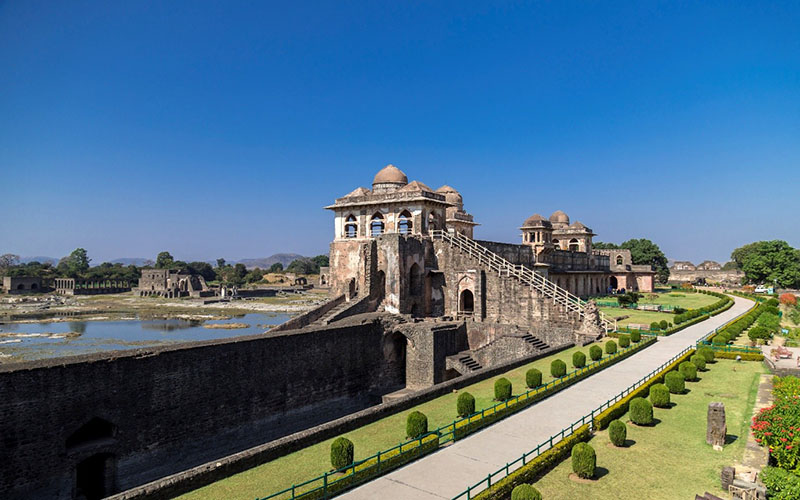
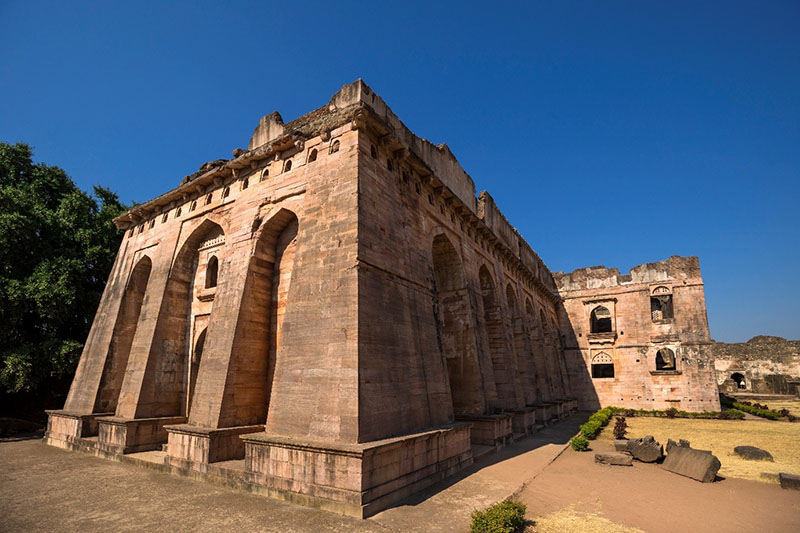
Perched high on the Malwa plateau, Mandu is a city of romantic legends and magnificent ruins surrounded by sweeping views of valleys and monsoon-fed lakes. Palaces, mosques, and elegant pavilions rise dramatically from the plateau’s edge, creating one of the most atmospheric historic landscapes in central India. The graceful Jahaz Mahal, appearing to float between two shimmering lakes, captures the poetic spirit of a city forever linked with the legendary love story of Baz Bahadur and Roopmati.
3. Royal towns: Orchha
Rising along the tranquil banks of the Betwa River, Orchha’s skyline of palace complexes, temples, and graceful cenotaphs evokes the splendour of a medieval Rajput kingdom. Founded in the 16th century by the Bundela rulers, the town retains an extraordinary sense of historic continuity. Within the fort complex, faded murals and intricately carved halls reveal glimpses of royal life, while the riverside chhatris stand as hauntingly beautiful memorials to the region’s rulers.
4. Lost medieval city: Champaner
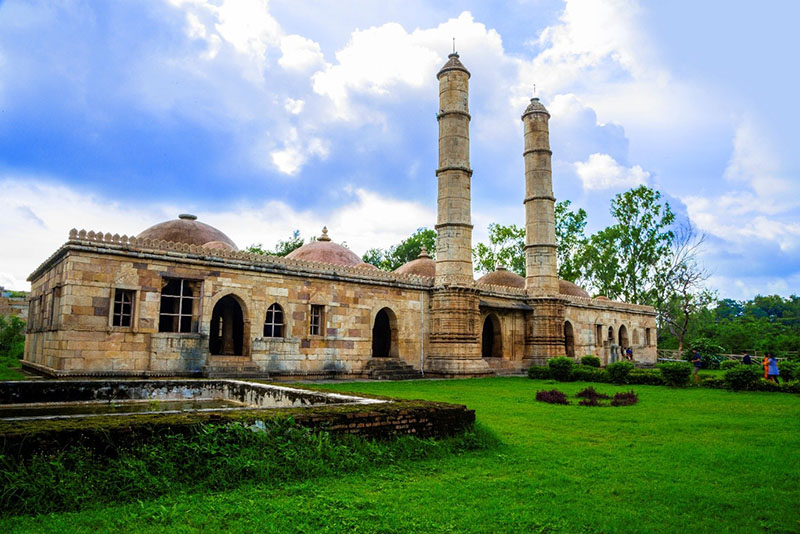
At the foot of the sacred Pavagadh Hill lies the remarkably preserved ruins of Champaner, once the flourishing capital of the Gujarat Sultanate. The city’s elegant mosques, gateways, stepwells, and fortifications display a remarkable blend of Islamic and Hindu architectural traditions. Wandering through its quiet monuments and forest-fringed pathways offers the rare sensation of discovering a medieval city that time almost forgot.
5. Ancient civilisation: Dholavira
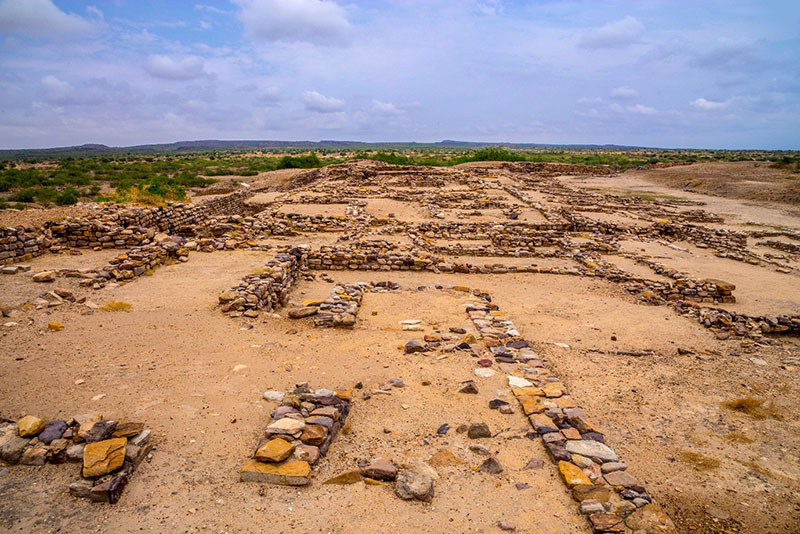
Hidden within the stark beauty of the Rann of Kutch, Dholavira was one of the most sophisticated urban centres of the Indus Valley Civilization over 4,500 years ago. Excavations reveal an astonishingly advanced settlement with massive reservoirs, intricate water management systems, and carefully planned fortifications. Standing amid these ancient stone structures, visitors gain a profound sense of the ingenuity and vision of one of the world’s earliest civilizations.
6. Spiritual ruins: Sanchi
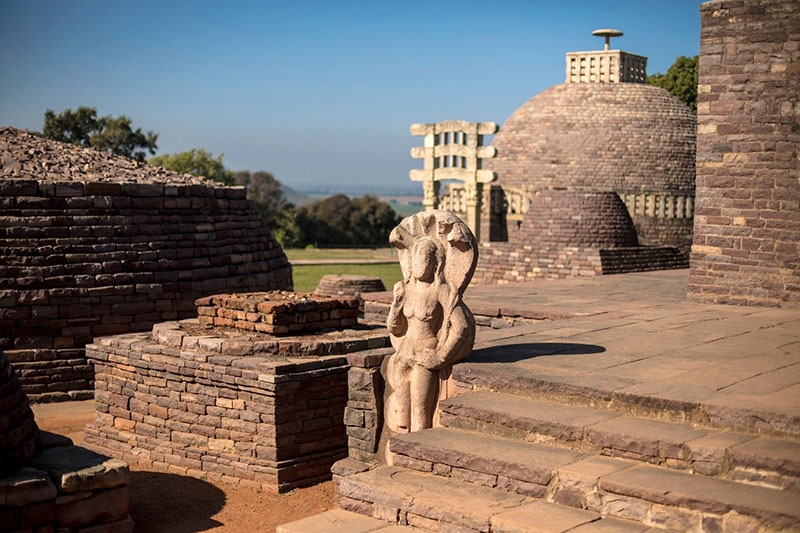
Among the most serene archaeological landscapes in India, Sanchi preserves the remains of ancient Buddhist monasteries and temples surrounding its magnificent stupas.
Commissioned during the reign of Emperor Ashoka in the 3rd century BCE, the site became an important centre of Buddhist learning and devotion. The intricately carved gateways of the Great Stupa narrate scenes from the life of the Buddha, offering a remarkable window into the spiritual and artistic traditions of ancient India.
7. Mysterious abandoned fort: Bhangarh
Nestled beneath the rugged slopes of the Aravalli hills, the abandoned town of Bhangarh remains one of India’s most intriguing historic sites. The ruins of temples, marketplaces, and royal residences stretch across the valley, their silent courtyards and crumbling walls steeped in legend. While folklore has given the site an aura of mystery, the architectural remains reveal the once-thriving town that flourished here during the 17th century.
8. Dramatic abandoned fortress: Tughlaqabad Fort
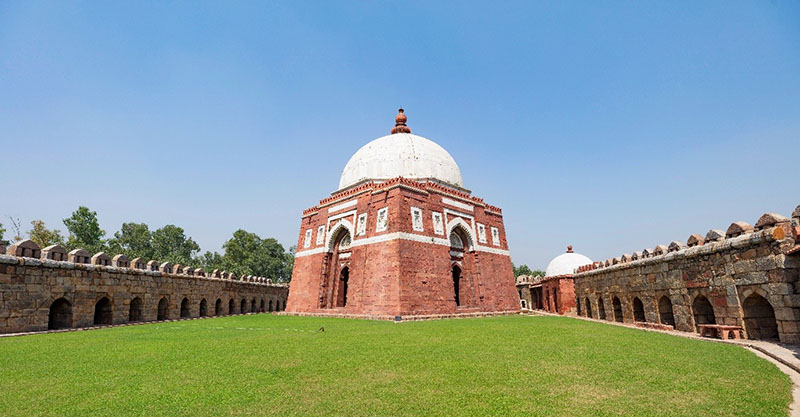
Built in the 14th century by Sultan Ghiyas-ud-din Tughlaq, this massive stone fortress was once envisioned as an impregnable capital city. Today its sprawling walls, bastions, and ruined palaces stretch dramatically across the rocky landscape of South Delhi, creating one of the most atmospheric historical ruins in North India.
9. Imperial Chola Capital: Gangaikonda Cholapuram
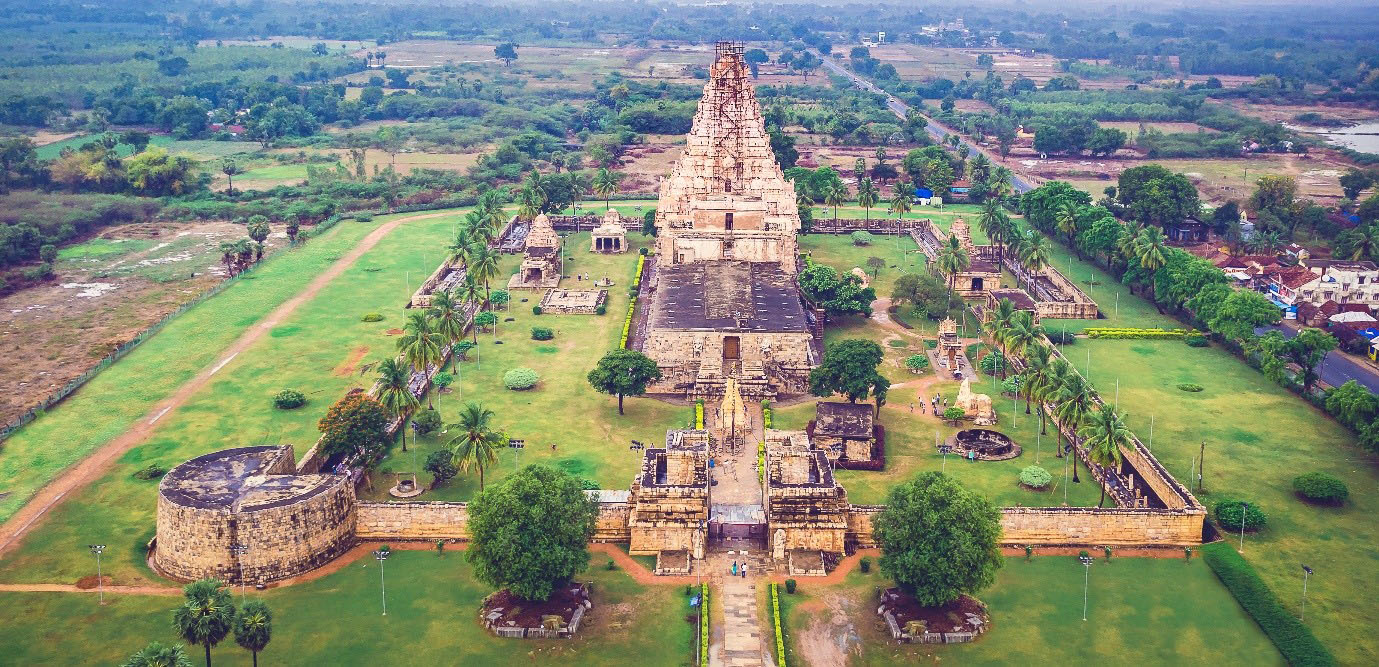
Built in the 11th century by the great Chola emperor Rajendra Chola I, Gangaikonda Cholapuram was once the imperial capital of the Chola dynasty. Its magnificent Brihadisvara Temple, Gangaikonda Cholapuram stands as a masterpiece of Chola architecture, with graceful sculptural details and a soaring vimana that reflects the power and artistic brilliance of one of South India’s greatest empires. Today, the temple and surrounding ruins evoke the grandeur of a capital that once symbolised the Cholas’ far-reaching influence across South and Southeast Asia.
10. Ancient Lost University: Nalanda Mahavihara
Among the world’s earliest and most celebrated universities, Nalanda flourished from the 5th to the 12th centuries as a global centre of Buddhist learning. Scholars and monks from across Asia once gathered here to study philosophy, medicine, and astronomy, leaving behind a vast complex of monasteries, temples, and libraries whose evocative ruins still speak of an extraordinary intellectual and spiritual legacy. Walking through its red-brick courtyards today offers a glimpse into one of the most remarkable centres of knowledge in the ancient world.
Ruins invite us to see history not as distant chapters in a book, but as places that can still be walked, felt, and imagined. Whether set amid dramatic landscapes, sacred hills, or forgotten capitals, these destinations offer travellers a chance to experience India’s past in its most evocative form—where every archway, temple, and silent courtyard whispers a story waiting to be rediscovered.